Strait of Hormuz: What the Ceasefire and Reopening Push Mean for UAE Businesses
Editorial note: UAE Roadmap publishes independent practical guides for founders, expats, and operators. Some pages include clearly disclosed affiliate or group-service links where relevant.
Updated 10 April 2026
Three days into the US-Israel-Iran ceasefire, the Gulf is in an unusual moment: fighting has paused, but the Strait of Hormuz question has not been resolved. This morning, ADNOC CEO Sultan Al Jaber made a public call for its unconditional reopening, citing international law and oil trade stability for shippers worldwide.
If you run a business in the UAE or you’re an expat living here, you need to understand what this situation means in practical terms, what it has already changed, what remains uncertain, and what you should be doing right now.
What Is the Strait of Hormuz and Why Does It Matter?
The Strait of Hormuz is a narrow waterway between the UAE and Iran, connecting the Persian Gulf to the Gulf of Oman and the wider Indian Ocean. It is 33 kilometres wide at its narrowest point.
About 21 million barrels of oil pass through it every day, roughly 20% of global oil supply. It is also a critical passage for:
- Liquefied natural gas (LNG) exports from Qatar, the world’s largest LNG exporter
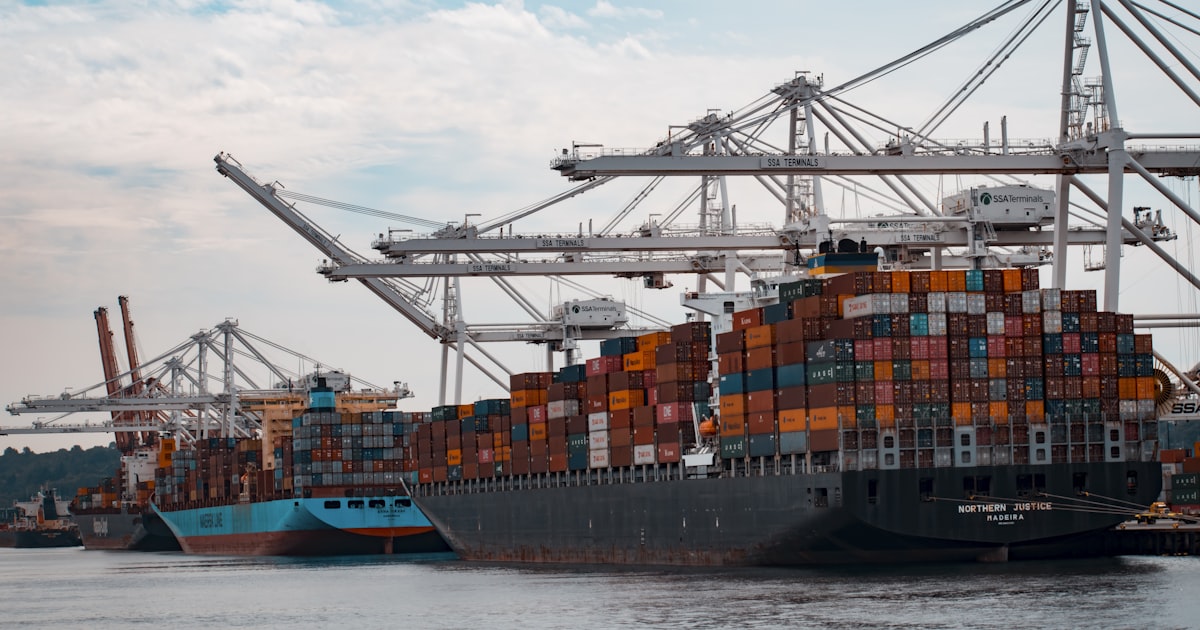
- Container shipping to and from UAE ports (Jebel Ali is consistently ranked among the world’s top ten container ports)
- Import supply chains: UAE imports over 90% of its food and consumer goods
When the Strait is threatened or restricted, the global economy notices within days. Shipping insurance rates rise. Fuel surcharges go up. Import costs increase. These effects hit UAE businesses whether they’re involved in energy or not.
What Has Actually Happened Over the Past Weeks
Without going into full conflict details: military activity in the region led to a period of heightened risk in Gulf waters. Shipping companies re-routed vessels. Some insurance underwriters applied war-risk premiums. The UAE government maintained civil operations throughout.
The ceasefire announced earlier this week brought immediate relief. Stock markets responded. Oil prices, which had spiked sharply during the conflict period, pulled back partially. Shipping volumes through Jebel Ali are recovering.
The formal reopening of the Strait, if and when Iran confirms it, would complete that recovery. Al Jaber’s statement this morning is a push to accelerate that step.
How Did This Affect UAE Business in Practice?
Import costs went up
UAE businesses importing goods, including food, electronics, construction materials, and consumer products, faced immediate cost increases. Shipping lines applied emergency surcharges ranging from $500 to $2,500 per container on Gulf routes during peak uncertainty. For small importers bringing in 3-5 containers per month, that adds AED 7,000 to AED 35,000 in unanticipated cost per month.
Some of that has now reversed as shipping normalises. But suppliers who agreed to higher-priced orders during the disruption period may not pass the savings back immediately.
Fuel costs moved sharply
Jet fuel, diesel, and energy prices for UAE businesses using significant fuel (logistics, manufacturing, hospitality) saw direct cost impacts. The UAE’s Ministry of Energy links fuel prices to global benchmarks. If you track your fuel costs against a fixed budget, the variance from March and early April was significant.
Business sentiment tightened
Investment decisions paused. Some planned office expansions were put on hold. Hiring decisions that were close to sign-off got delayed. This is a normal response during geopolitical uncertainty, not a crisis, but a friction cost on operations.
The UAE itself stayed open
This is worth stating clearly: Dubai and Abu Dhabi airports ran normal operations throughout. Government services did not close. Banks operated normally. Businesses stayed open.
The UAE’s institutional resilience during this period was a direct demonstration of decades of deliberate infrastructure investment and relationship management. If you were watching Dubai from outside and wondering whether to proceed with a UAE business move, the operational stability through this period is meaningful evidence.
What the Ceasefire and Reopening Call Mean Now
The ceasefire is positive but fragile. Ceasefires at day 3 can hold and can collapse. The practical implications for UAE businesses right now:
Shipping normalisation is underway. War-risk premiums are unwinding. Route diversions are being reversed. If you had supply chains disrupted, expect improvement over the next 2-4 weeks as the shipping industry resets its routing.
Oil prices are stabilising. The spike has partially reversed. What happens next depends on whether the Strait is formally reopened and whether the ceasefire holds. A full, verified reopening with diplomatic guarantees would likely push oil prices back to pre-crisis levels within days.
Banking and transfers are normal. UAE banks processed international transfers throughout the conflict period without interruption. If you were worried about sending or receiving money, there is nothing to indicate any ongoing issue. The guide to sending money internationally from the UAE covers your best options for international transfers.
Regional uncertainty has not gone away. A ceasefire is not a peace deal. Long-term structural questions about Iran’s relationship with the US and Israel are unresolved. The UAE’s strategic position, maintaining productive relationships with all parties while protecting its own trade interests, is the same as it has been for 20 years.
What UAE Business Owners Should Do Right Now
Review your supply chain resilience
If this period exposed a single-supplier or single-route dependency in your supply chain, fix it. The disruption has created a window to have honest conversations with procurement and suppliers about alternative routes and backup vendors.
Businesses with diverse supplier bases across multiple geographies absorbed this disruption with minimal impact. Businesses dependent on a single shipping corridor or supplier faced a harder few weeks.
Check your business insurance
Many standard UAE commercial insurance policies include war-risk exclusions. This period is a useful prompt to call your broker and understand what you’re actually covered for. Ask specifically:
- Does your stock or goods-in-transit cover include conflict zone exclusions?
- Does your business interruption policy cover supply chain disruption from regional conflict?
- What are your property and liability coverages if your business is physically affected by conflict?
Most UAE SMEs underestimate the importance of business interruption cover. It’s rarely needed, but when it is, it’s the difference between recovery and closure.
Build a cash buffer
The golden rule for UAE businesses during periods of regional instability: hold 3 months of operating expenses in cash or near-cash. This gives you the runway to absorb cost spikes (shipping, fuel, staff) without panic-selling assets or drawing down credit at the worst moment.
If your business hit that 3-month buffer rule during this period, you probably weathered it fine. If you didn’t, this is the moment to rebuild it.
Don’t make permanent decisions based on temporary uncertainty
Some businesses paused hiring, cancelled lease renewals, or accelerated plans to move operations out of the UAE during the conflict period, decisions that may be hard to reverse now that the situation has shifted significantly.
The UAE is not a risk-free operating environment, and no market is. But the risk profile here is structural and well understood. The government’s incentives to maintain stability are very strong. Foreign direct investment, tourism, and trade are the pillars of the country’s economic model. The playbook during this period followed a predictable pattern.
If you have a UAE business plan that made sense before April 2026, it almost certainly still makes sense now.
What Expats Should Know
The AED remains stable
The UAE Dirham is pegged to the US Dollar at 3.6725. This peg has held through every regional crisis since 1997, including the 2008 financial crisis, the 2020 oil price collapse, and the COVID-19 shutdown. There was no credible threat to the peg during this period, and there is none now.
You don’t need to convert AED holdings to another currency as a precaution. If you’re receiving a salary in AED and sending money home regularly, the currency dynamics are unchanged. The UAE banking fees comparison covers the most cost-effective ways to move money internationally.
Residency visa status is unaffected
UAE residency visas, Emirates IDs, and all government services related to residency continued operating normally. If you had visa renewals or applications in process, there is no expected backlog as a result of the conflict period.
Emergency preparedness basics
Whether or not a situation like this recurs, it is worth having basic emergency preparations in place as an expat:
- Keep your passport and Emirates ID in a known, accessible location
- Have at least 1 week of essentials (water, food, medication) at home
- Know your country’s embassy contact number
- Have an international SIM or a way to reach family abroad if local networks are congested
- Hold some cash. ATMs in the UAE are well stocked, but a small amount of physical AED and USD is a sensible household buffer
These are not crisis measures. They’re just adult preparations that make sense when you live in any region with geopolitical complexity.
The UAE’s Positioning Is Clear
Al Jaber’s statement this morning is notable not just for what it says about the Strait, but for what it signals about UAE strategy. The UAE is not a passive bystander in this situation. It is actively pushing for the conditions that protect its own economic interests: stable oil markets, open shipping, and functioning global trade.
That posture is consistent with the UAE’s approach across decades of regional turbulence. It is not ideological. It is commercially rational. The country needs the Strait open, needs trade to flow, and has both the relationships and the platform to push for that outcome publicly.
For businesses based here, that’s actually a stable foundation. You’re operating in a country whose government has very strong and very clear economic incentives to maintain the conditions your business depends on.
For more on building a resilient business structure in the UAE, the UAE corporate tax guide and the UAE accounting basics guide cover the financial foundations worth getting right regardless of the external environment.
Editorial note
How UAE Roadmap approaches growing a business in the uae
UAE Roadmap is written for founders, freelancers, expats, and operators who need practical guidance, not sales copy. We aim to explain real costs, realistic timelines, trade-offs, and common failure points. Where an article includes affiliate links or mentions a connected service, that relationship is disclosed.
We update articles when rules, fees, or operating realities change, but this site is still general information rather than legal, tax, or immigration advice for your exact case. Read our editorial approach.
Related guides
UAE September 2026 Tax Changes and Key Dates: What Businesses Should Do This Month
A practical September 2026 guide to UAE tax changes and compliance dates, including what founders should check now, likely costs, and how to avoid a month-end scramble.
FTA September 30 Deadline UAE Corporate Tax: What Businesses Should Do Right Now
A practical guide to the UAE FTA's September 30 corporate tax filing warning, what businesses need to check now, likely penalties and adviser costs, and how to avoid a last-minute compliance mess.
UAE Conditional VAT Registration Guide 2026: What to Do If Revenue Is Close but Not Clear
A practical 2026 guide for UAE founders dealing with uncertain VAT timing, including threshold checks, evidence, costs, timelines, and what to do when revenue is close but not straightforward.
Free Consultation
Ready to set up your UAE company?
Get a free consultation with a licensed UAE company formation specialist. They'll walk you through costs, freezone options, and the full process — no commitment needed.
Affiliate links — we may earn a referral fee if you use these services, at no extra cost to you.
Recommended for UAE Businesses
HR, hiring, and product design — sorted
WireApps helps UAE founders and SMEs with HR software (Horilla & Odoo), recruitment tech (Hirevia), and product design (Wire Designs). Built for businesses like yours.
Free Weekly Newsletter
UAE Roadmap Weekly
Business updates, visa changes, banking tips and new guides — delivered to your inbox every week. Free.
Subscribe — it's freeNo spam. Unsubscribe any time.